

Nota del Editor
Esta es la 2.ª entrega de la serie Encontrando un Hogar de Jeff Schinsky.La Parte 1 trató sobre Cómo Evaluar el Barrioy te sugerimos empezar por ahí. Si bien este artículo está escrito principalmente desde la perspectiva de encontrar unapropiedad en arriendo, muchos de los mismos principios se pueden aplicar cuando buscás unapropiedad para comprar en Cuenca. Una vez que hayas terminado este artículo, te sugerimos revisar el3.er artículo de la serie sobre consideraciones del contrato de arriendo. ¡Que lo disfrutés!
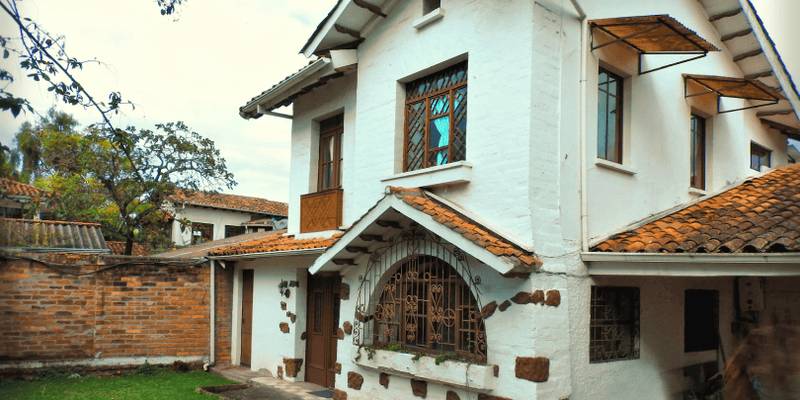
Unos meses después de llegar a Cuenca, encontré una casa de campo antigua de adobe cheverísima en El Vergel, de casi 100 años. Todavía tenía los pisos originales de cerámica italiana pintada a mano, una escalera de madera con curvas que subía al segundo piso, y muchas otras características peculiares que me parecieron fascinantes. Le eché un vistazo al lugar y decidí que tenía que quedarme con él.
Todo había sido recién pintado, y pensé que habían hecho un trabajo particularmente bonito en los muebles de la cocina. Los muebles también tenían todo tipo de rincones, cajones, etc. La propiedad también tenía un buen espacio verde al frente y un pequeño patio cerrado en la parte de atrás. Así que fui y firmé elcontrato de arriendoy empecé el proceso de instalarme en la casa.
Sin embargo, más tarde ese día, abrí las puertas de los muebles bajos de la cocina para guardar algunos productos de limpieza… cuando de repente me llegó un ciertoolorque me golpeó fuerte. Encendí mi linterna y miré adentro, y me horrorizó encontrar moho negro, espeso y pegajoso por toda la parte inferior de los muebles y el fregadero. Inmediatamente le escribí a la arrendadora y le pregunté si podía arreglar el problema y luego descontar el costo del arriendo. Para mi sorpresa, ella optó en cambio por mandar a un arquitecto y una cuadrilla para sacar todos los muebles viejos, eliminar el moho, sellar las paredes, ¡e instalar todos los muebles nuevos! Claro, no se veían tan chéveres como los muebles viejos, pero de todas formas me quedé muy tranquilo.
Y esa historia, mis ñaños, es una pura excepción — las cosasrara vezfuncionan así por acá. Por suerte para mí, la casa tenía un gran valor sentimental para el dueño y su familia, así que nunca tuvieron problema en arreglar lo que necesitaba arreglarse. En pocas palabras, tuve mucha suerte, y de dos maneras distintas: Primero, lograr que el dueño arreglecualquier cosaen una propiedad en arriendo acá es complicado. Segundo, hicieron el trabajobien hecho, en vez de simplemente hacer lo suficiente para que se vea y huela bien por unos meses.
El punto de esta historia es ilustrar el hecho de que yo no teníani ideade lo que estaba haciendo cuando arrendé esta casa por primera vez, y apenas tenía una vaga idea de cómo evaluar correctamente un lugar así para decidir si sería un buen hogar para mí. Esto pudo haber sido el típico desastre de arriendo para expat, pero todo terminó saliendo bien gracias a la conexión personal del dueño con la casa, y porque él y su familia son personas buenas y responsables. Otra vez, tuve suerte.
Estableciendo Expectativas
En mi último artículo, repasé las cosas que hay que buscar (o de las que hay quecuidarse) alelegir y evaluar unbarriodonde vivir.Si todavía no has leído ese artículo, te recomiendo mucho hacerlo antes de comprometerte con cualquier nueva propiedad en arriendo.Podés encontrarlo aquí.Por ahora, asumiré que ya repasaste tu lista de verificación para evaluar el barrio y le diste luz verde al área alrededor de la casa.
Lo primero que tenés que hacer, especialmente si recién llegás al Ecuador,es dejar todas tus expectativas afuera de la puerta. Esto no es Estados Unidos, no es Canadá, y arrendar una casa acá es muy distinto a lo que muchos de vosotros — perdón, a lo que muchos de ustedes pueden estar acostumbrados. Vas a ver algunas propiedades acá y te vas a preguntar si acaso tuvieron un plano u otro plan formal de construcción. A veces parece que simplemente "calcularon a ojo" el terreno de construcción, se imaginaron lo que querían hacer, y luego empezaron a apilar ladrillo sobre ladrillo. Los grifos de agua caliente y fría suelen estar al revés, generalmente no hay suficientes tomas eléctricas, y esas tomas muy rara vez están a tierra. Inevitablemente habrá defectos o "características no declaradas" que ni siquiera se te va aocurrirbuscar porque no son el tipo de cosas que buscamos en nuestros países de origen. Así que hacé tu mejor esfuerzo por ser neutral y objetivo, y recordá que esencialmente estamos en un país en vías de desarrollo. Lo mejor que podés hacer ahora mismo es olvidarte de qué tan perfecta te parece la propiedad, y luego hacer tu mejor esfuerzo para identificar y evaluar los problemas más graves o molestos que vas a encontrar.
Eso es lo que este artículo te va a mostrar cómo hacer: inspeccionar una propiedad que estás considerando arrendar y, en la medida de lo posible, identificar problemas actuales y futuros que podrían causarte un gran disgusto y "arrepentimiento del arrendatario." Conozco a tanta gente que encontró lo que creía que era el hogar ideal, solo para terminar odiándolo y volverse miserable unos meses después. Como descargo de responsabilidad, no puedo cubrir todas las situaciones posibles que vas a encontrar, pero haré mi mejor esfuerzo para darte las cosas más importantes que he aprendido en mis nueve años acá. Empezaré explicando algo de la terminología que vas a ver en los avisos de arriendo.
Terminología
Casa: Casa. Tené en cuenta que la mayoría de las casas acá están físicamente pegadas a la casa de al lado, pero igual se consideran viviendas individuales.
Departamento:Esta es la palabra más usada para "apartment" acá. Muy de vez en cuando verás la forma alternativa, apartamento.
Se Alquila, En Renta, En Alquiler, Arriendo Casa/Departamento:Estas son algunas de las formas más comunes de decir "For Rent" en español. (En Venta significa "se vende.")
Arrendador/Arrendadora:El arrendador, que generalmente también es el dueño.
Arrendatario/Arrendataria:El arrendatario o inquilino.
Amoblado:Amoblado ("sin amoblar" significa sin muebles). Tené en cuenta que no parece haber ningún estándar para lo que se considera amoblado, sin amoblar o parcialmente amoblado, así que andá con cero expectativas y fijate qué está incluido. Si está amoblado, asegurate de revisar el inventario con lupa y anotá cualquier defecto: una pata suelta en una mesa, una puerta de mueble caída, los controles de todos los electrodomésticos, los porta-toallas y porta-papel higiénico — sacá fotos de cualquier cosa que no esté "perfecta" y compartí esas fotos con el dueño.
M2: Metros cuadrados. Este número, cuando se da sin ninguna aclaración, generalmente se refiere al metraje total de la propiedad, y no solo de la casa o departamento en sí. Si dicen "M2 de Construcción," ese debería ser el número que especifica el metraje de la vivienda en sí, y cualquier estructura adyacente. Tienden a ser bastante imprecisos con este número, así que no lo hagas un factor determinante, ni en un sentido ni en el otro. (¡También son muy reservados para dar la edad exacta de la casa, a veces quitándole hasta 50 años al número real!)
Cocina: Dependiendo del contexto, esta palabra puede significar tanto "cocina" (el espacio) como "cocina/estufa" (el aparato).
Encimera:¿Te agarré ahí, verdad? Unaencimeraes una placa de cocción con un número variable de quemadores, y generalmente está embutida en una abertura cortada en la mesada de la cocina.Puede o no haber un horno incluidoen casas conencimera; conozco a una persona que no se dio cuenta de que no había horno hastadespuésde firmar el contrato de arriendo. Es un truco que nos juega la mente: vemos que hay una placa de cocción, y es muy fácil asumir que también hay un horno.
Línea Blanca: Cuando se ofrece con una propiedad en arriendo, generalmente se refiere a la línea completa de electrodomésticos tradicionales de cocina, y a veces también incluye lavadora y secadora. Por supuesto, los artículos concretos que conforman tu línea blanca pueden variar de una propiedad a otra, pero igual debería ser bastante completa. Debés hacer una "revisión de funcionamiento" de todo lo que se pueda revisar. Si algo está roto o no funciona, asegurate de anotarlo en tu contrato de arriendo y pedirle al dueño una fecha límite de reparación por escrito.
Espacio Verde, Jardín, Patio: Todos se usan para referirse a áreas con césped en la propiedad. Puede ser solo un pedacito de pasto de un metro cuadrado, pero igual lo van a listar.
Terraza: Terraza. Si vas a vivir en un departamento, tener una terraza es bacán. La mayoría de la gente no usa mucho las terrazas pequeñas, y muchos no usan las más grandes tanto como pensaban. El viento es un problema enorme, al igual que el ruido en algunas zonas. Pero una terraza puede ser un lugar agradable para tomar aire fresco, especialmente si tiene techo.
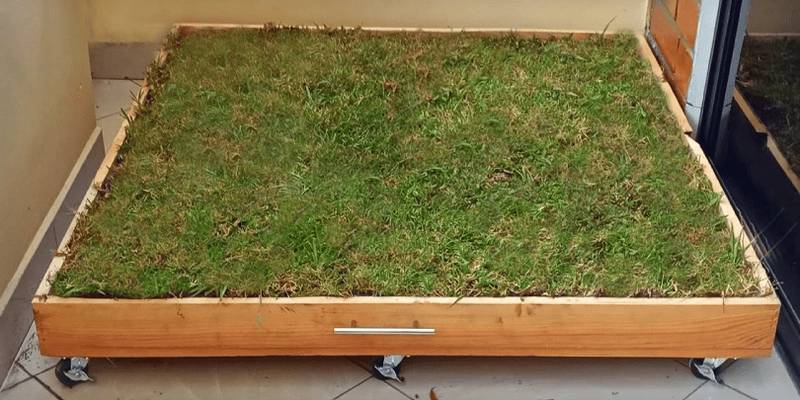
Además, si tenés un perro y elegís un departamento, ¡asegurate de tener una terraza! Podés mandar a hacer una "caja de deposiciones" (ver foto) construida y rellena con piedra, tierra y pasto, y ponerla en la terraza. Es una alternativa muy práctica a sacar a Froofy a pasear a las 3 de la madrugada. Vas a necesitar regarla si está cubierta, y también cortar el pasto según sea necesario.
Bodega: Acá en el Ecuador, unabodegaes un espacio o cuarto de almacenamiento. Una cosa curiosa con la que te vas a encontrar de vez en cuando es que el dueño va a querer mantener un área de almacenamiento en la casa o departamento que te está arrendando avos. No es una situación ideal, pero tampoco es inusual. Simplemente tenés que decidir si podés vivir en una propiedad donde hay un cuarto o un depósito cerrado con las pertenencias de otra persona. Y si terminás con las pertenencias del dueño bajo llave en tu propiedad, asegurate de incluir algo como una cláusula deaviso de 24 a 48 horasen el contrato, que es el tiempo de aviso que vas a exigir que el dueño te dé antes de venir a revisar su bodega.
Sala: Sala de estar (pero podría referirse a cualquier cuarto genérico, dependiendo del contexto).
Comedor: Ya sea un comedor formal o un área de comedor dentro de un espacio más pequeño.
Baño: Baño. (Unbaño sociales un baño de visitas.)
HabitaciónoCuarto: Ambas palabras se usan comúnmente para referirse al dormitorio, perocuartoa veces se usa en otros contextos para referirse a cualquier cuarto en general.
Buhardilla: Puede ser un ático, un loft o algún espacio encima de las áreas principales de vivienda. He escuchado esta palabra usarse principalmente para describir espacios terminados o semiterminados, en contraposición a áticos completamente sin terminar.
Sótano: Sótano (¡desde que vivo en Cuenca he visto exactamenteunode estos!)
Ascensor: Ascensor. Si vas a vivir en el tercer piso o más arriba de un edificio de departamentos, probablemente vas a querer que haya ascensor.Pero si elegís un penthouseque tiene un ascensor que abre directamente a tu departamento, tené en cuenta que lo más probable es que el personal de mantenimiento entre directamente a tu departamento cada mes para hacer el mantenimiento requerido. ¡Preguntá esto!
Plazo: Se refiere a la duración del período de arriendo especificado en el contrato. Tené en cuenta que legalmente tenés derecho a un contrato de arriendo mínimo de dos años, lo cual personalmente te recomiendo aprovechar (más sobre eso en el próximoartículo sobreevaluación de contratos de arriendo).
Canon: Cuando se usa en un contrato de arriendo, se refiere al pago mensual del arriendo.
Servicios Básicos: Servicios básicos, o sea, los servicios de tu hogar. Generalmente abarca electricidad (llamadaluzacá) y agua. Si hay una toma telefónica fija activa en la casa, esa también estará incluida. Tené en cuenta que los servicios casi siempre están a nombre del dueño, porque ellos son quienes son ultimadamente responsables si vos no pagás las facturas. A veces incluyen los servicios en el arriendo, lo cual puede ser una buena idea en ciertas situaciones.
Alícuota: Traducida de manera aproximada, significa "tu parte proporcional." Son las cuotas de mantenimiento del edificio que se cobran en casi todos los edificios de departamentos, y también en algunas urbanizaciones. El dinero se usa para las reparaciones, la limpieza y el mantenimiento periódico de las áreas comunes. Tené en cuenta que muchos avisos de arriendo ni siquiera mencionan laalícuota,a menos que esté incluida en tu arriendo. Esto significa que si vas a ver un departamento, necesitáspreguntaral agente o al dueño si la alícuota está incluida en el monto de arriendo publicado. Tené en cuenta que cada edificio cobra un monto diferente, y esta cuota también puede aumentarse temporalmente para ciertos proyectos mayores en el edificio. Como arrendatario,no deberías ser responsable de pagar estas tarifas temporalmente más altas, así que asegurate de especificarlo en tu contrato. Estate pendiente del próximo artículo sobre contratos de arriendo para información adicional. Lo mejor es negociar un contrato donde parte del monto que pagás sea unacantidad fijaincluida con tu pago de arriendo.
Cerco Eléctrico: Cerca eléctrica. Muchas casas las tienen acá por razones de seguridad, y parecen ser un disuasivo muy efectivo contra los ladrones. Si la casa que estás viendo no tiene una, siempre podés negociarla en tu contrato. Siempre preguntá si el dueño pagará parte o todo el costo de dicho sistema. Si se niegan, al menos intentá conseguir permiso por escrito para instalar uno con tus propios fondos. Para la mayoría de las instalaciones, probablemente estás viendo entre $300 y $500 por un sistema que activará una alarma si es tocado o perturbado.
Tranquilo: Significa "silencioso" cuando se usa como adjetivo, especialmente al referirse al área alrededor de la propiedad que estás considerando. Solo recordá que "tranquilo" significa muchas cosas diferentes para diferentes personas.
Ahora que hemos repasado algunos términos que vas a ver mucho mientras revisás contratos y avisos de arriendo, entremos en una de las consideraciones más importantes que tenés que tener al elegir una casa en Cuenca: ¡la seguridad!
Seguridad –¡Siempre va Primero!
Departamentos
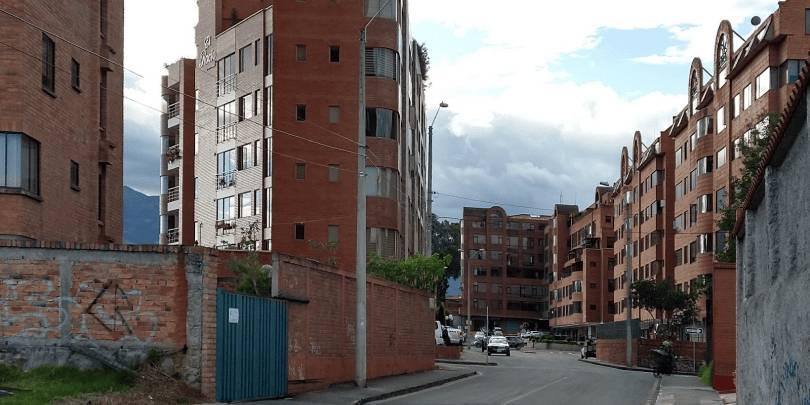
Lo único que siempre escucho de los expats que eligen vivir en un edificio de departamentos (en vez de en una casa) es que es "más seguro," especialmente si tieneseguridad las 24 horas. Si bien esto puede parecer verdad a primera vista, personalmente conozco más personas que han sido robadas en departamentos que en casas. Uno de esos robos lo cometió el propio guardia de seguridad. En otro robo del que tengo conocimiento, el guardia parece haber hecho deliberadamente la vista gorda ypermitidoque el robo ocurriera.
Pensalo bien. Los guardias son personas normales como vos y yo. Son susceptibles a sobornos, chantajes y amenazas contra ellos y sus familias. Pasa. O, en algunos casos, es simplemente una falta de carácter. También hay muchas formas de colarse en el edificio de departamentos promedio, incluyendo entrar por la puerta del garaje cuando se abre. Una vez adentro, es solo cuestión de subir al ascensor y recorrer el edificio a su antojo.
En un robo a un expat, los ladrones escalaron los barandales alrededor de un balcón del primer piso, subiéndose hasta elsegundopiso, donde las puertas corredizas del balcón ya estaban sin seguro por descuido del arrendatario. Así que no solo fue robado ese departamento, sino que los malhechores tuvieron acceso al resto del segundo piso.
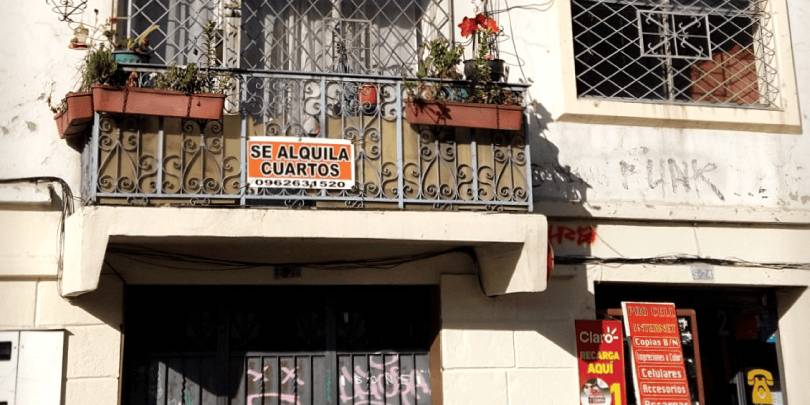
Esto no es un evento del todo inusual, así que si tomás un departamento en el segundo piso, ¡necesitás mantener esas puertas con seguro! En la imagen que se muestra, podés ver que la puerta y las ventanas de la terraza del segundo piso tienen rejas de seguridad adicionales instaladas. Vas a ver esto una y otra vez en el centro histórico y en otros lugares.
Perodeberíasestar suficientemente seguro en un penthouse, ¿verdad? Bueno, quizás, en la mayoría de los edificios. Pero una buena amiga, cuando se mudó a su penthouse, me pidió que cortara escobas para ponerlas en la parte inferior de las cuatro puertas corredizas que daban a su enorme terraza. Le pregunté si esperaba queBatmanse apareciera, y ella se rio.
Pero mientras ella estaba de viaje en Estados Unidos, unos ladrones subieron por una escalera adicional que llevaba a un área de servicio en el techo, y desde allí pudieron bajar a su terraza e intentar entrar. Había señales claras de que intentaron entrar por las puertas corredizas, ¡pero fueron 100% bloqueados por esas escobas!
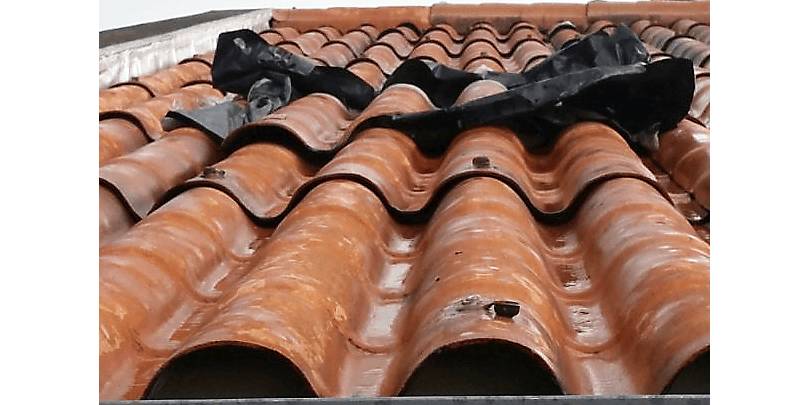
Entonces volvieron al techo y arrancaron paneles del techo en algunos lugares (ver foto, donde se ha colocado temporalmente una funda de basura negra mientras se realizan las reparaciones). Luego bajaron al espacio entre el techo y el cielo raso de su departamento y lograron patear grandes huecos en el cielo raso. Por alguna razón, abandonaron sus esfuerzos justo antes de entrar, pero dejaron muchos daños a su paso. Este fue un caso en el que el guardia y el administrador del edificio nunca se molestaron en cerrar con llave la puerta de acceso al techo, y fueron por tanto cómplices del intento de robo. Negaron toda responsabilidad, por supuesto, pero claramente fue un fallo de su parte.
Vale la pena notar que la mayoría de las personas robadas en edificios de departamentosno están en casa en ese momento. Pueden estar trabajando, de vacaciones o en un viaje largo al exterior. Así que preguntate esto:¿Cómo sabían los malhechores que vos no estabas en casa?Pues bien,el guardia de seguridad¡lo sabe! ¡Elpersonal de limpiezalo sabe! ¡Eltaxistaque te llevó al aeropuerto lo sabe! Alguien siempre sabe, y la mayoría de las veces saben porque nosotros mismos se lo dijimos. Cuando uno se va de viaje, es muy natural compartirlo con amigos y conocidos.
Así que para cuando te vas, todos en tu cadena diaria de eventos ya saben que te habrás ido, y a veces sabrán exactamente cuándo vas a regresar. Si de verdad confiás en tu guardia de seguridad, deberías avisarlecuándo vas a estar ausente. O, mejor aún, si tenés un amigo de confianza en el mismo edificio, dale una llave para emergencias (o para regar las plantas, darle de comer al gato, etc.), y luego no le digas a nadie más que te vas. Siempre hay cierto riesgo cuando dejás que demasiada gente sepa de tus planes de viaje, así que intentá limitar a quién le contás.
Ahora, no quiero que suene como si los edificios de departamentos fueran inherentemente inseguros. Haymuchosotros edificios de departamentos en la ciudad que son muy difíciles de entrar sin ser notado. Tienen muchas cámaras, requieren llaves electrónicas para entrar por las puertas del sótano y activar los ascensores, y educan activamente a los residentes sobre buenas prácticas de seguridad. Algunos tienen cercos de seguridad alrededor del perímetro de la propiedad que impide que personas no autorizadas se acerquen demasiado a esos departamentos en los pisos inferiores. Y en muchos de esos edificios, el personal de seguridad ha estado allí desde que se construyó el lugar, y son en gran medida de confianza.
Así que si tomáramos una muestra representativa de todos los edificios de departamentos en Cuenca, la calidad y eficacia de la seguridad física varía ampliamente, al igual que el carácter de las personas que trabajan en roles de confianza en ese edificio. Por eso, si estás considerando un departamento:
Pediles que te muestren todas las características de seguridad del edificio, incluyendo la vigilancia por cámaras. Si ves áreas que parecen estar mal protegidas, preguntales cómo planean evitar que la gente entre por allí, con qué frecuencia realizan rondas de seguridad, etc.
En edificios donde no hay personal de seguridad a tiempo completo, asumí la responsabilidad de asegurarte de que todas las rejas de seguridad permanezcan cerradas, y de que nadie haya dejado la puerta principal abierta mientras mete las compras. Además, considerá crear un "Vecindario Vigilante" dentro del edificio por Whatsapp para reportarse mutuamente cualquier sonido o avistamiento extraño.
Verificá que haya una cerradura, una tarjeta de acceso o una llave electrónica que sea necesaria para que las personas puedan entrar al edificio y/o al ascensor desde el sótano y otras partes del edificio.
Si arrendás un departamento, nunca arrendés tu puesto de parqueo extra a alguien queno viva ya en el mismo edificioy que tenga sus propios medios para entrar y salir del garaje.
.No dejés entrar al lobby principal ni al garaje a personas que no reconocés; en cambio, deciles que tendrán que llamar al guardia para que les dé entrada.
Y no hay forma de saber cuántas personas todavía tienen llaves de tu unidad. Eso incluye al arrendatario anterior, al dueño, a los agentes de arriendo, a los guardias, al personal de limpieza, etc. Así que hacé que sea una condición en tu contrato que se te permita cambiar la cerradura, o al menos hacer que la cerradura existente sea reconfigurada.
Finalmente, mantené esas puertas del balcón con seguro cuando no las estés usando, y considerá poner una escoba en el riel de la corredera, sin importar en qué piso estés. Puede que no sea 100% necesario, ¡pero apuesto a que vas a dormir más tranquilo!
Casas
Ciertamente hay toda una serie de problemas de seguridad con las casas también, pero pueden ser tan seguras como el edificio de departamentos promedio, si no más.
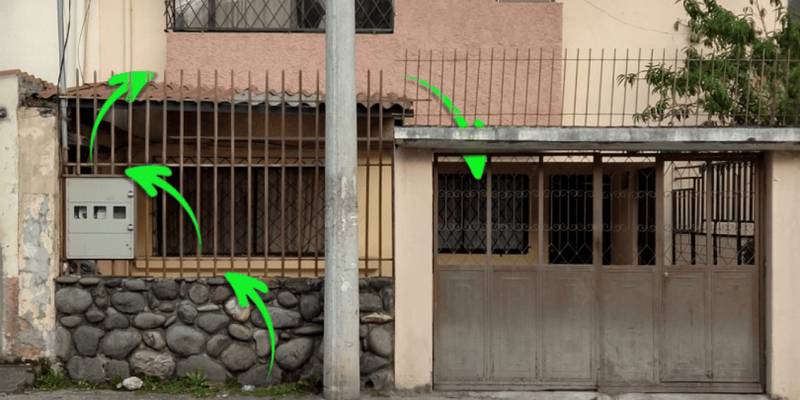
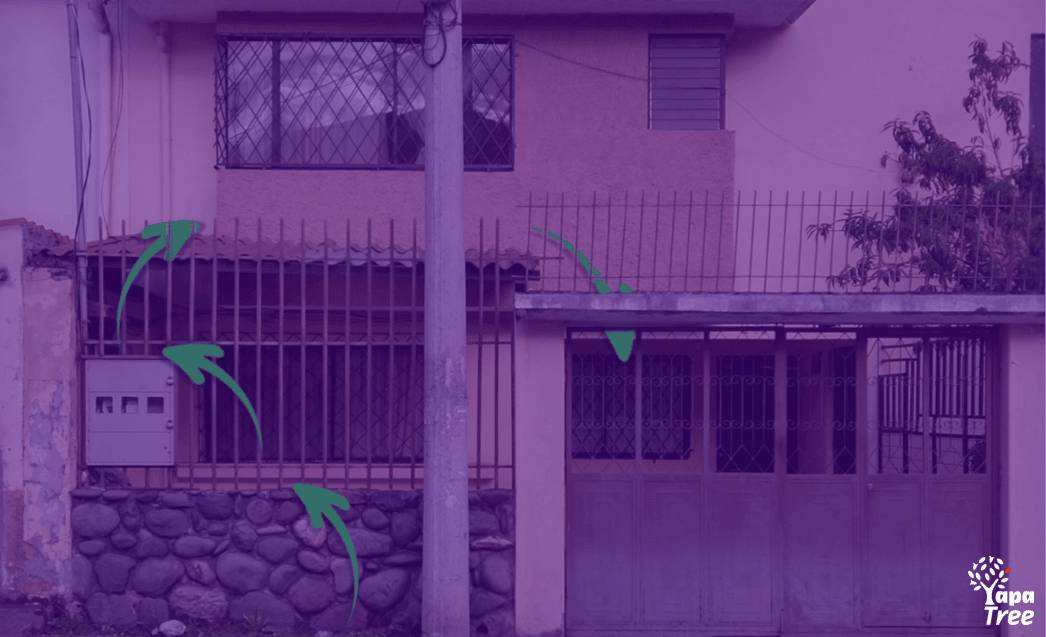
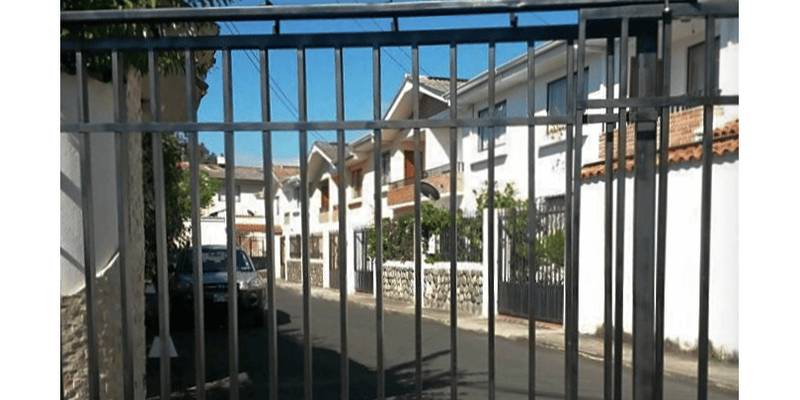
Primero, fijémonos en una casa que tiene graves fallas de seguridad. ¿Notás el muro de piedra bajo al frente de la casa en esta foto? Ese es el paso uno. ¿Luego la caja con los medidores de servicios? Ese sería el paso número dos. Luego un salto rápido sobre la reja hacia el pequeño techo, y finalmente podés caer directo al garaje.
Una vez vi un video de un vecino siendo robado, y entraron a la propiedad exactamente como describí (sin el pequeño techo de zinc). Pero muchas casas en Cuenca estánarmadas exactamente así, y pasar por encima del muro de seguridad sería pan comido para cualquier ladrón.
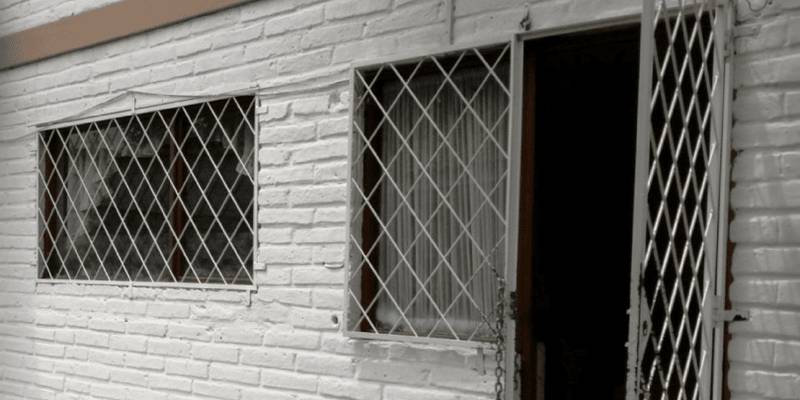
Este tipo de instalación puede mitigarse con rejas metálicas adicionales instaladas sobre las ventanas y puertas. (No muy estético, pero efectivo). A veces también parece más problema de lo que vale, pero si tenés un muro o cerco de seguridad exterior inadecuado como el que se muestra arriba, deberías tomarte el tiempo de cerrar con llave estas rejas de puertas, al menos por las noches.
Una cosa clave sobre los objetivos de robo
En el video del robo a mi vecino, también tuve la oportunidad deobservar el comportamiento del ladrón: Se movió rápidamente por nuestra calle sin salida, deteniéndose y revisando cada propiedad en el camino. Una tenía seguridad impenetrable. Una casa estaba vacía. La siguiente tenía seguridad complicada, pero "Ah" — lasiguienteestaba armada exactamente igual que la de la foto de arriba. El ladrón fácilmente se subió parte del muro, se paró en un soporte plegable de basura, y luego sin esfuerzo saltó el resto de la reja baja. La puerta del frente no había sido cerrada con llave, ¡así que este tipo se llevó un buen botín!
El punto aquí es que él eraselectivo. ¿Y qué eligió?¡Era la casa con la seguridad más débil de la cuadra!No había ningún otro objetivo. No estaba buscando específicamente "expats ricos."¡Estaba buscando vulnerabilidad!
En otras palabras,la disuasiónes el nombre del juego, y todo lo que podás hacer para que tu propiedad parezca menos vulnerable podría ser lo único que te libre de ser robado.
Así que incluso si tu cerco eléctrico alrededor de la parte superior de tu reja no está energizado, igual es unindicador visualpara los posibles ladrones de que esto podría ser más problema de lo que vale,lo que lo lleva a seguir de largo y buscar un objetivo más fácil.
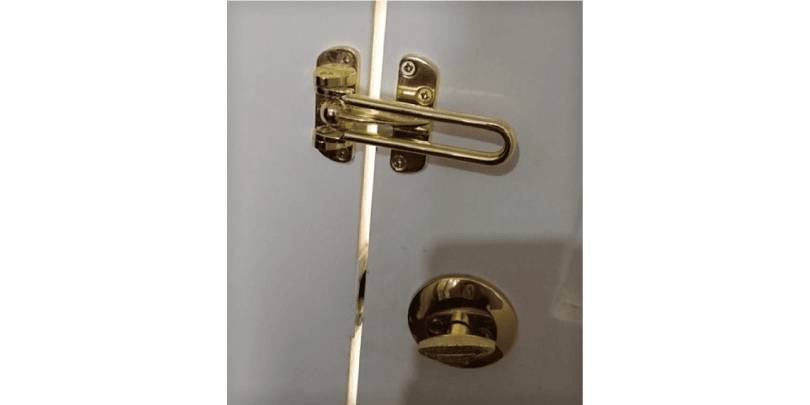
Y para mayor tranquilidad por las noches, considerá instalar un sencillo seguro de palanca y deslizamiento como el de esta foto. Son extremadamente sencillos de instalar y solo requieren un toque de dedo para ponerlo en posición de seguro. También son engañosamente efectivos para mantener fuera a intrusos casuales. Alguien decidido a entrar siempre puede patear la puerta, pero ahí va su objetivo de hacer una entrada silenciosa y sigilosa en la madrugada.
Un ejemplo de buena seguridad
Esta es una de mis antiguas casas. La reja de seguridad negra básica no es tan alta, y podría escalarse fácilmentesi no fuera por loscuatro pies adicionales de cerca eléctricainstalados directamente encima de ella. En la parte trasera de la casa, había paredes sólidas de 15 pies de altura.
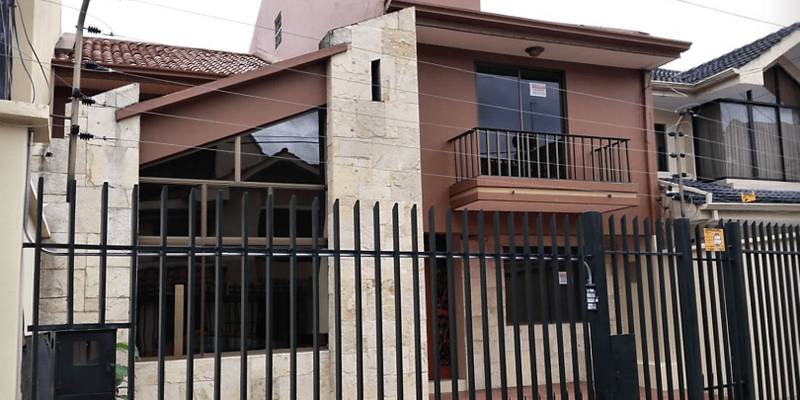
¿Significa esto que sería imposible entrar? ¡Para nada! Cualquier propiedad puede ser robada, pero la percepción del ladr
The time I was robbed in Cuenca
I was living in yet another house, and it had the typical security fence with open metal bars on the fence and the gate. In other words, everyone walking by could see everything I was doing outside, working on various projects I was doing with a variety of power tools.
One night, I heard a loud boom, but I thought one of the girls had dropped something heavy upstairs. The next morning, I went out to my bodega and found that the padlock hasp had been pried off, and that every one of my power tools were gone. Of course, I was really upset and went through all of the normal emotions one goes through after having been burgled. But then I stopped and looked around me, and I saw no signs of forced entry. The security gate was plenty high, so what went wrong?
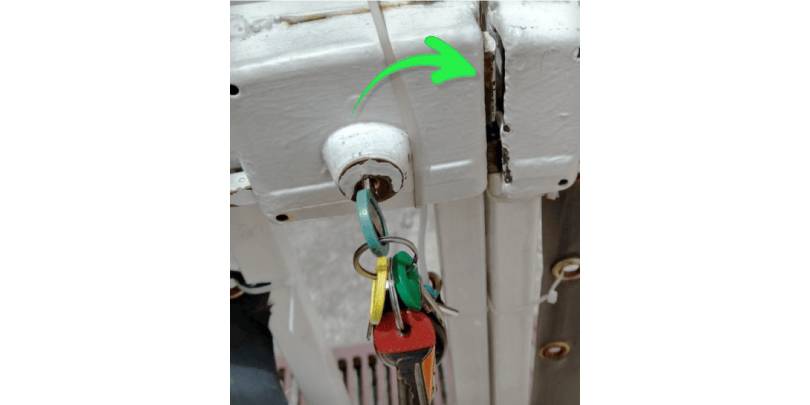
I went out to the front gate and then, after looking for a while, noticed that there was no protective metal plate covering the lock mechanism, making it extremely vulnerable. So I grabbed a screwdriver, stuck it down into the latch, and “boom!” – it popped right open! So I was essentially robbed because of a poor lock installation, and because I had personally failed to go out every night and also lock the deadbolt that was part of the mechanism.
So I know it’s a hassle, but make the trip out to your front gate every evening and lock that deadbolt! Or for locks that don't have a deadbolt, loop some heavy chain around the moving parts and put a heavy padlock on it. Also, check the electronically activated lock to make sure that it’s well covered, and that you can’t stick some foreign object into it and pop it open.
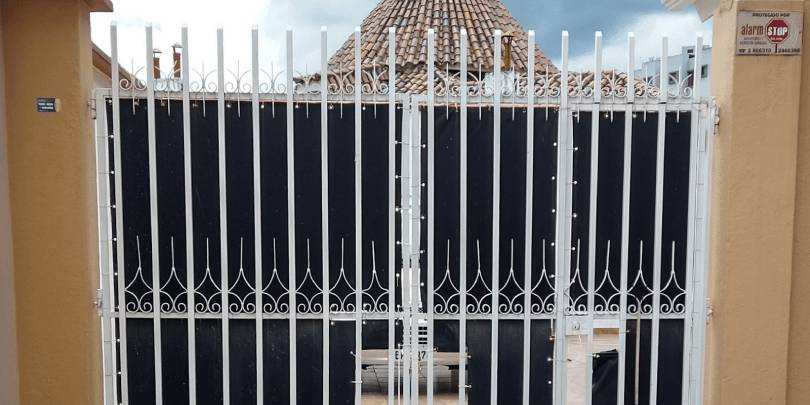
Also, my burglary was obviously targeted, since someone knew about my power tools and precisely where I kept them. But let’s assume for a moment that I was robbed simply because somebody could see through my gate and take note of everything I was doing.
What I decided to do to remedy that situation in my current home is to put this heavy, waterproof cloth over the inside of my gate. I bought a punch, a grommet die, and cut the panels to size. I then put the grommets in the fabric and secured them all to the gate with plastic zip-ties. Think of it as “visual security.” Sometimes, removing the source of temptation is all it takes, and every little thing you can do to enhance your privacy and security will add up.
Alarm Systems
Many homes have them here, but to the best of my knowledge, tenants rarely use them. They’re difficult to program, meaning you’d probably need to call the installer to figure it out. Then you have the issue of remembering to set it every time you go out. Then you have to disarm it every time you come home. In one of my homes, I had to shut the system off at night, every time I needed to go downstairs for something. So after a month of that (and sometimes forgetting to shut off the downstairs sensors), we just stopped using it. I’m not sure how things would have been different if I had paid for the alarm service, so I’ll leave that up to you to explore.
You can have alarm systems armed without being connected to a commercial security service. One such system is connected to the electric fencing, and whenever those wires are disturbed, an alarm goes off. A simple keychain fob turns it on and off, making it very convenient. If you find a house where you feel like security would be enhanced with electrical fencing, I’d recommend a system like this.
My Number One Pick for Secure Living: The Gated Community
I still hear of occasional burglaries in both apartments and houses, but one type of place where I’ve personally never heard of a robbery is in a gated community (referred to here in Cuenca as an urbanización). An urbanización has a lot of things going for it.
For one thing, some of them have a 24-hour security guard posted at the gate itself. Others have cameras to keep an eye on things, and automatically close gates to keep out unwanted vehicles.
But even the gated communities that don’t have guards are still far better policed by the residents themselves than they would be outside a gated community! Someone is always looking out a window, noting unusual sounds, and challenging any strangers who wander into their territory. Plus the residents all know each other, and in many cases, they are literally made up of extended family members. There are too many reasons for a burglar to avoid these communities, and not enough good reasons to risk getting caught inside one. To me, that’s effective security!
And now that we’ve finished covering the highlights of home security, let’s move along now and look at all the sorts of things you should be inspecting in and around the property itself.
Preparing for the Property Visit & Evaluation
I like to take five things with me when visiting a property for rent: a camera, a notepad, a measuring tape, a flashlight, and a list of measurements for those items I’ll be moving with me, so that I can make sure that all of my belongings will fit through the doors, up the stairs, around the corners, etc. You’d be surprised how many people fail to do this, and how many either end up moving again immediately, or end up selling those things they’d rather keep.
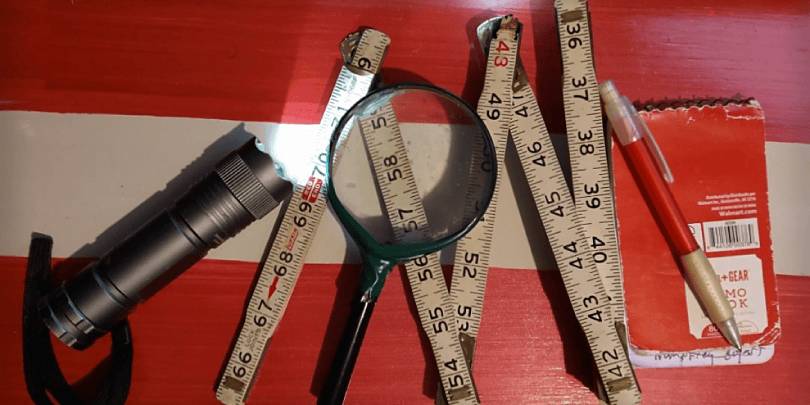
The camera is the most important item. It’s always a great idea to take your own photos and videos so you’ll remember the layout of the home later. It can get a little confusing later, trying to remember all six floorplans you saw that day! I also highly recommend doing a video walkthrough too, because photos don’t always capture the whole story.
You’ll also use the camera for documenting any and all damage or flaws that you find. Search the property high and low, taking photos of every nick, scratch, worn spot, fingerprints on the wall, cracks in the windows, stains on the floor, loose towel racks, chips out of the countertops – I mean everything that’s not 100% “perfect.” If the property is furnished, you also need to inspect every item on the inventory to make sure the descriptions and stated conditions match what the inventory says. Why go to all this trouble? Because the odds are that you will be accused of being responsible for everything that’s not “perfect” on move-out day.
One reason for this is that most leases state that the property is in “perfect condition,” which is physically impossible unless the place is brand new. So if it’s not perfect, you need to document all the reasons why it is not, and have the language of the lease changed accordingly (this will be covered in more detail in the next article).
If you decide to go ahead and rent the place, be sure to email a copy of all photos and videos to the owner, and be sure to copy yourself on all such emails. That way, on move-out day, there will be 90% less bickering over the sorts of things owners usually bicker over. Steal their thunder up-front and take some photos to protect yourself from unscrupulous owners.
Kitchens
If security is the Number One item on your list of things to evaluate, then kitchens aren’t far behind. For expat renters in Cuenca, kitchens often end up being one of the greatest sources of headaches and “renter regret.” As such, they deserve a little extra attention when evaluating them as part of your potential new home.
Mold
This is the very first thing I look for when evaluating a kitchen. As I related in my own story about mold, I got very lucky. I had no idea that mold was something that I actually had to look for here, and I had already signed a lease! So do yourself a huge favor and bend down, open the cabinet doors under the sink, and take a good long whiff. Many times there may be a musty smell, even if there is no mold, and that’s largely controllable.
Now take a flashlight and look up under the sink and the counters themselves: Are there any black splotchy growths up under there? If so, and if it’s not something that can be wiped off with a damp paper towel, it’s time to head for the door! You don’t want a house with a kitchen full of mold. Sometimes owners will try to have it “cleaned,” but there’s no cleaning black mold. Nothing short of ripping out and replacing those cabinets is going to help, and most owners will not go to that extent. You should also look in the upper cabinets, because you never know how far mold is going to spread.
Appliances (if included)
I recently watched a discussion unfold in my Facebook Group, Expats Without Agendas, where someone was looking for an oven rack. Apparently, his oven was missing one. He called around, tried different retailers, but nothing! As the discussion continued, it turned out that this was not uncommon at all! So if there’s an oven included, check for all the obvious things, but also make sure there’s an oven rack!
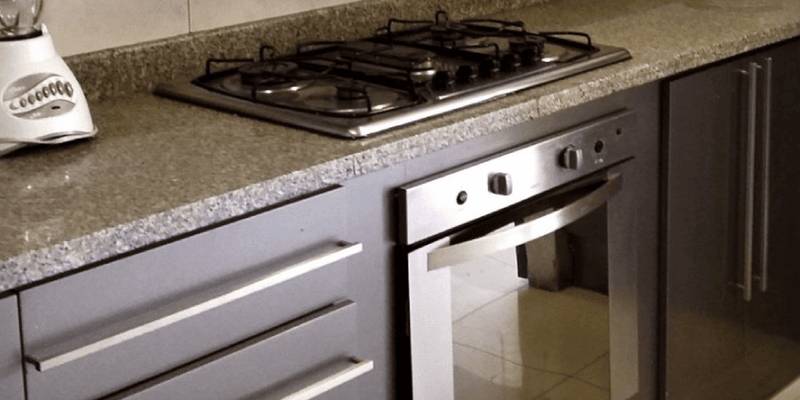
I already touched on encimeras earlier, which are simple cooktops built into the countertop. This photo shows such an encimera, and it also shows the oven installed underneath it. But be aware! – it’s very easy to take a quick look around the kitchen, see the cooktop, and let your brain convince you that there must be an oven too. This, however, is not always the case, especially in apartments.
Often, the space below where the cooktop is mounted will have another space specifically designed for an oven insert. So, if you end up needing one, that will likely be purchased at your own expense. Keep in mind that those oven inserts are almost always electric, and pretty much all of them require a 220-volt outlet. (Check for that, too!)
Then there’s my wife’s obsession – the extractor de olores, or the “range hood.” Some hoods are coated inside with grease, and you should insist that the owner have it cleaned before you move in. Some hoods work and some don’t. Some have fans that actually vent the cooking fumes outside.
Others (ductless range hoods) are not vented outside at all, and that’s okay if it is indeed a ductless range hood. Then you have some that are just big, open, passive hoods that allow the fumes to float up and out of the house without a fan or lights. So again, check to make sure the range hood functions, and that the correct type is installed if there is no outside venting.
Finally, if you have other appliances that will be included with the rental, check each and every one of them to make sure they work properly. Check all of the knobs and controls. If you don’t do your due diligence here, and something is not working when you move out, you’ll most likely take a hit on your security deposit. And while you’re checking out the appliances, you might want to look and see if you have sufficient electrical outlets for the appliances you’ll need to use regularly. If you need another outlet, an electrician can install additional ones as needed.
Cabinetry and drawers
The quality of materials, workmanship, and installation methods vary widely here. Primarily, you’ll want to make sure that all cabinets are hanging straight, that all hardware is present and functioning, that the drawers open and close easily and completely, and that there is no damage to external surfaces. Look for any scratches, chips, stains, etc., and take photos of every imperfection.
Also, look to see if there are shelves inside the cabinets! I’ve seen dozens of homes with large, roomy cabinets, but for some unknown reason, there are no shelves inside! My current house was that way, but I knew that because I had looked for it. Rather than bother the owner about it, I just ended up cutting some MDF and installing my own shelves.
Plumbing fixtures
Check to make sure that all faucets work, that the drains drain, and that the drain tubes down below the sink are tight and not leaking. If there is a problem with a faucet, then you’ll need a new faucet; replacement parts are pretty much non-existent here. The same goes for sink stoppers – most rental properties don’t have one, and finding one that will fit your specific drain is usually a fruitless task. A good idea would be to bring several types of universal drain stoppers with you when you come to Ecuador, or have someone bring an assortment down for you.
Also be aware that in many homes, the hot and cold water faucets will be plumbed backwards, e.g, “hot is the new cold!” And, it could be different everywhere in the house where there are faucets. Then there are the faucets for the washing machine, which in many cases, are both plumbed with cold water. If having hot water for your washer is important, this is something you should check for. The same may be true for certain faucets throughout the house. But, personally, I would not turn down a house over something like reversed hot-and-cold faucets.
Water pressure
Low water pressure can be a huge issue here, because the on-demand water heater (calefón) requires a certain amount of water pressure to trigger it to ignite and make hot water. You should likewise check the water pressure in the bathrooms, because it can vary from one room to the next. I’ll go into more detail when talking about the calefón itself, later in this article.
Roofs
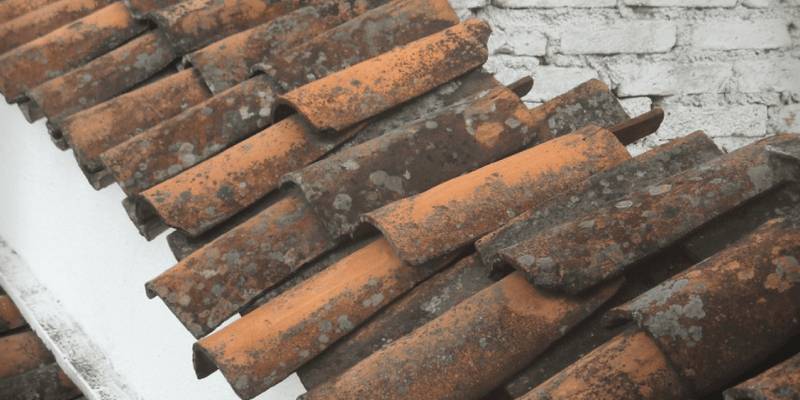
I love the look of the red-tiled roofs we have all over Cuenca, but they are notorious for leaks and can require frequent repair or maintenance. First of all, older homes use all individual tiles that sit on top of another layer of roofing material. In some homes, the tiles will start to slip off and expose the underlayment. When that happens, you’re most likely going to get a leak.
In apartments, the tiles usually come prefabricated as easy-to-manage squares, and are likewise mounted to underlayment and bolted down for security. However, as I mentioned with my friend’s penthouse, they are still not that secure, and can easily be pried up and used as an entryway into the apartment below (assuming you’re in the penthouse).
So when you’re evaluating a given home, try to see what condition the tiles are in. If you see defects, misplaced or dangling tiles, note that in the lease and give a deadline for repairs. Also, from inside the house, look up at the ceiling to see if you can find any wet spots or stains that may indicate water damage. Also look for recent repairs that have been painted over, as they may just be trying to mask an existing problem for the sole purpose of getting a new renter into the property.
Skylights
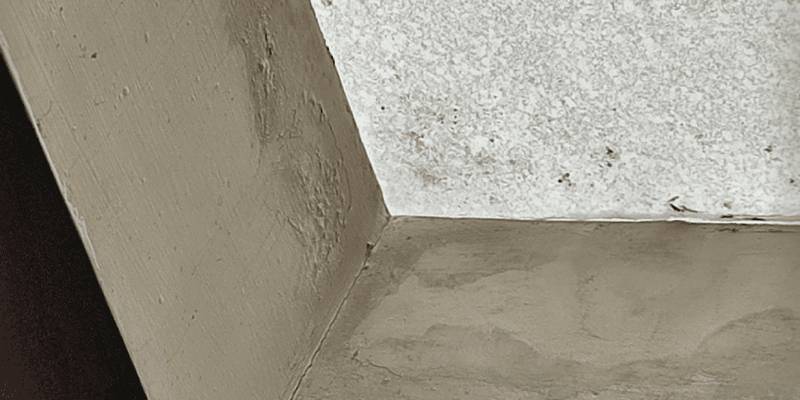
Cuenca just loves those skylights, and you’ll see them in a good number of properties here. The bad news is, a large percentage of them leak! Some leak badly.
Sometimes the leaks can be sealed, but I lived in one house where both I and the landlady had called out repair companies on multiple occasions, but nobody could fix it. I eventually had to have an architect look at the skylight in one of my houses here, and he told me that it was a flawed design, and that it was never not going to leak, no matter what they did to it. In short, it needed to be replaced, and the landlady declined to do that. Fortunately, I was aware of the leak before I moved into the house, and wrote an “easy-out” escape clause in my lease.
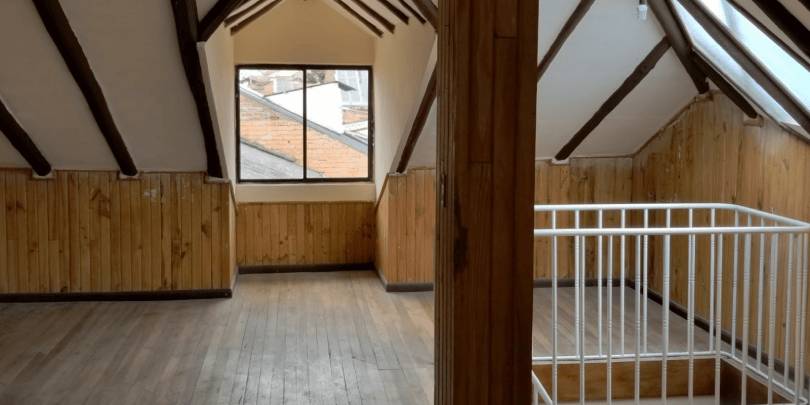
The Buhardilla
A buhardilla is essentially an attic space or loft, and most of the time when they’re referred to by this name, they’re at least partially finished. Otherwise, it’s only a “bodega.” Buhardillas are nice to have, either for storage or to use as an extra bedroom, office, or living space. Just keep in mind that during the warmer months, it could get uncomfortably toasty in this space.
Ceilings
Most ceilings here – even in some newer construction – are a patchwork of gypsum tiles that have been hung from the underside of your roof. Some are very plain, and are spackled together so that they look like one large, flat surface. Others are more decorated and textured, which you may or may not like.
You should examine every ceiling in every room in the property, looking for any signs of leaks, water damage, or recently repaired damage. Many times the “repairs” are simply cosmetic patches that last long enough to get someone new into the property. If you see anything suspicious, make sure to put an escape clause in your lease.
Regarding “escape clauses,” they simply state that if any necessary repairs or maintenance are not handled in a timely manner, then you have the right to move out without penalty and receive your full deposit back. Or, you could also put a clause in your lease that allows you to make urgent repairs yourself, and later deduct the cost from your rent. (Please read the next article on leasing issues for more information on this process.)
Is it your ceiling, or your upstairs neighbors’ floor?
The quality of construction and materials used in apartments and duplexes vary greatly. Some have virtually no noise-transfer, while others allow you to hear almost everything that’s going on in the unit directly above you. Here’s what you should do: Ask everyone who’s currently in the property to please stop talking or making any other sort of noise. Then stop and listen for a full minute. What do you hear? Can you hear footsteps, dog-nails, or a child’s scooter? Anything? If so, I’d personally keep looking, as there are plenty of buildings with minimal noise-transfer.
Lights
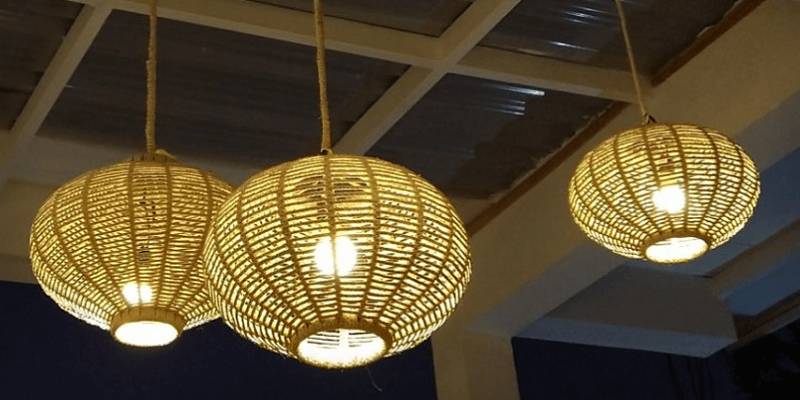
If you walk into a house and find electrical wires just dangling from the ceiling, that’s where the lights used to hang! Please note that this is a relatively common thing here, for individual tenants to install their own fixtures, and then take them with them when they move out. You can always ask your landlord to install something on those wires, but I wouldn’t expect much in the way of a positive response. Still, you never know until you try!
Now, for all the other light fixtures in the property, go through every room, turn on every switch, and make sure every single lightbulb works. Why? Because you’ll be expected to leave working lightbulbs in all those sockets when you move out, and not doing so will cause a hit to your security deposit.
Note that the ceiling tiles will not hold a screw, so if you hang a heavier light fixture, be sure to use the type of bolts that expand and grab the inside of the ceiling tile as you tighten them. If you’re only attaching a new fixture to a dangling electrical cord, then you’ll probably want to choose something that’s not too heavy.
Walls
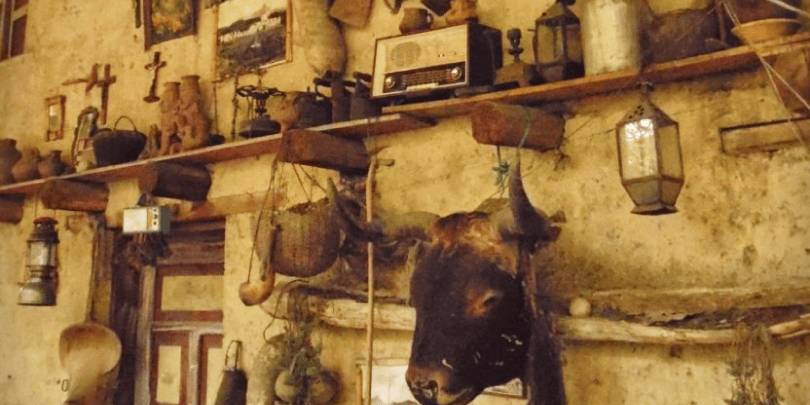
How many times in your pre-expat life did you do a thorough inspection of the walls before moving into a house or apartment? Never? (Me either.) In Ecuador, you need to get into the habit of checking them over very thoroughly. Certain problems could ruin your entire experience in a house, especially if you find some of the problems discussed below.
Where did all the right angles go?
There’s some sort of a “trend” here in some newer construction, where finding any sort of right angle between intersecting walls is nearly impossible. All the walls bend or warp or curve around, effectively eliminating all 90-degree angles. Imagine now that you have a refrigerator that’s 36 inches wide. Then, in the kitchen, you locate the space designated for the fridge, and it’s 38 inches wide at the opening. Great! That’ll work, right? Well, it should, as long as you also measure the back-end of that same space as well!
I had one friend who moved into a new place after taking all the necessary measurements, and as the movers were trying to put the fridge in place, they realized that the kitchen wall curved inwardly in that corner. This meant that the back of the space where the fridge was supposed to go was about 4 inches narrower than the front opening! She ended up living there with a fridge that was half-in and half-out of the space.
Chances are, if the place you’re looking at is short on right angles, the same will probably be true of the bedroom and living room walls as well, and you may find it a real challenge to put your furniture where you’d like to.
Paint
Look the walls over really well. If there are any stains, chips, fingerprints, or any other marks on the wall, take photos of them, or you’ll almost certainly be held responsible for them on move-out day. Fortunately, most owners will paint the inside walls in-between tenants. (Patching holes and removing old nails and screws is another matter entirely.)
Most owners these days pay the few extra dollars to put washable paint on the walls. But you’ll still occasionally find non-washable paint in some properties. You can tell the difference by lightly running your fingers over the paint; if you end up with paint-colored dust on your fingers, it’s the non-washable type. I would recommend mentioning this in the lease, and including a provision whereby you will not be held responsible for any paint issues upon moving out, because these walls are nearly impossible to keep clean. In fact, unless the property were otherwise very special, I’d probably pass on any property painted with non-washable paint.
Evaluating for noise-transfer
Just as with the ceilings, the quality of construction and the degree of noise-transfer between walls can vary greatly from one property to the next. House walls here are generally very solid, and there’s almost no noise transfer from one attached house to the other. Where you’ll find the greatest differences is in apartments, where the quality of construction can vary greatly..
There also appears to be no “standard” when it comes to local construction. Slightly older buildings seem to be a bit more solid and soundproof, but that’s no guarantee. Those “older” places are, in many cases, built of cinder blocks, concrete slab, or similar materials. (That’s why you’ll need a hammer-drill to hang anything heavy on the walls.) These types of building materials can cut most or all noise-transfer between adjoining apartments.
Some newer apartments have substantially “flimsier” walls, where you can hear almost everything going on in the adjoining units. So don’t be shy! Tell everyone to be quiet, and then put your own ear on the walls next to adjacent units and see what you can hear. In one unit I looked at, I had a friend go into the empty apartment and make a little noise for me. So he went next door and knocked on the wall and spoke a bit, and it sounded like he was almost in the same room! It’s a good thing we did that, because I was on the verge of signing the lease!
Also, keep in mind that many people work during the day and these units are often empty then. In order to get a much better idea regarding noise-transfer, ask the owner or your rental agent to arrange for you to come back in the evening, ideally between about 7 PM and 9 PM, so you can listen again. You’ll be glad you did this!
Adobe construction
The photo of the house at the beginning of this article is an example of adobe construction, as is the window below. Notice how thick the wall is around the window?
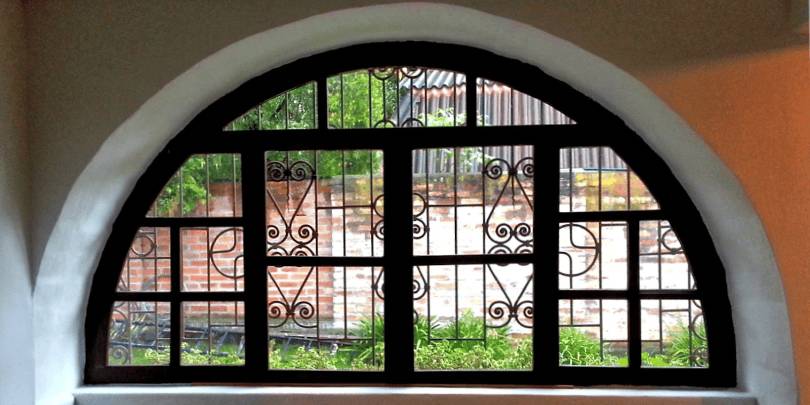
Adobe is essentially a mix of mud and straw and other random materials (bones, even!). These walls need to be thicker to support the overall load on them. They also tend to be a bit soft and can be easily damaged, so definitely use a drill to make holes in the walls.
Note that when you walk into an adobe home, it may feel cooler inside than it does outside. That’s because the adobe tends to hold in the ambient temperature. This can be slightly annoying on colder days, but this is easily remedied by running a good space heater for a while. The adobe will soak up all that heat and hold it in for much longer than other types of construction.
Adobe walls typically have bumpier and slightly uneven surfaces, but that’s completely normal.
In terms of doing an inspection, look for any larger cracks or holes and ask that they be fixed. If you see any water damage, insist that that be addressed immediately, because a wet adobe wall is a potentially dangerous wall.
Electrical outlets and light switches
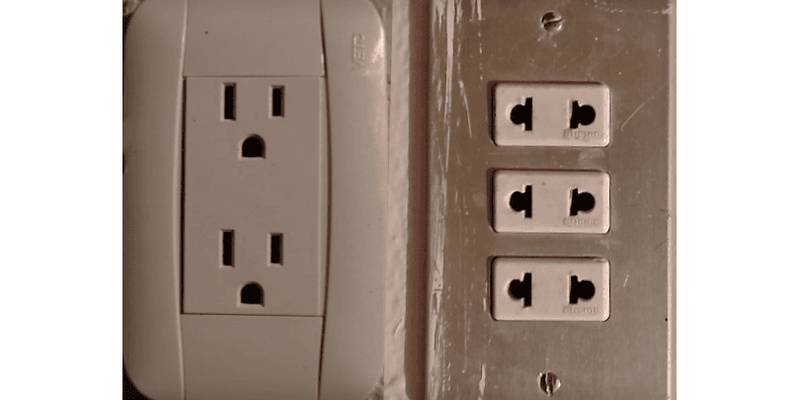
Most of the outlets you’ll see here are at least similar to the ones shown in the photo. The one on the right is a much older style, designed to take either round or flat-pronged plugs. And while they typically function fine, sometimes you’ll have polarity issues that can make certain appliances unsafe, and they can potentially damage delicate electronics.
And the outlet on the left is more modern and will accommodate a three-pronged plug – but just don’t expect it to be grounded! Even though the outlet has a hole for the ground, it will rarely be connected to any sort of ground wire. You can, however, get permission from the owner and pay an electrician to come and ground the house and the outlets for you. Likewise, you can work with the owner and the local electric company to come and install a 220-volt outlet if you need it for one of your appliances. Keep in mind that 220 volt plugs come in different configurations, so don’t get an outlet installed until you know precisely what you’re going to be plugging into it.
As part of your inspection, check every electrical outlet in the unit, along with every light switch, every dimmer, etc. Take along a small electric nightlight or a blow-dryer that will allow you to easily test the outlets. Chances are, you’ll find at least a few that don’t work. Most of the light switches and outlets here are very poorly made and fail easily. Again, any problems that you fail to find and note for the owner means that they become your problem on move-out day.
Checking walls for water damage
This is a huge issue, mainly because there are typically no drainage trenches dug between houses built in hilly areas, nor do they include a vapor barrier beneath any of the houses here.
Houses on level ground will sometimes see bulging and chipping plaster from moisture wicking up around the baseboards, and, if you’re lucky, that’s as bad as it gets. However, houses built on slopes are another matter entirely. You’ll get the same bulging and cracking and chipping, but you’ll also likely find the walls are soft and damp. During heavy periods of rain, you may also end up with water oozing through the wall and potentially spreading out across the floors, soaking everything in its path.
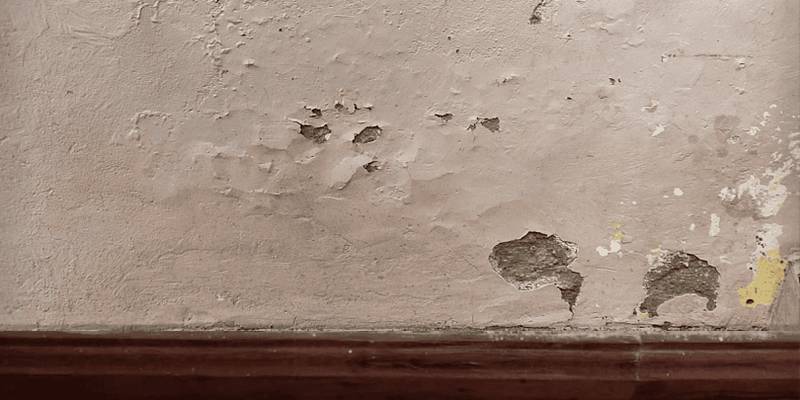
The parts of town where I’ve seen this the most are in the hilly areas up above the north side of Las Americas, and in the northwest hills above Ordoñez Lasso. If you’re looking at homes in those hilly areas, look very closely for any early signs of this sort of water damage. Also, look for signs of recent repairs and paint along the baseboards, as that’s likely only a temporary cosmetic repair.
Unfortunately, there’s very little that the owners can (or will) do about this, besides occasionally patching and repairing the damaged parts of the walls. I would personally recommend against renting in these hilly areas, or at least find some way to verify that the owner has put in a French drain, or has taken some other measures to divert the water that’s flowing directly downhill, and possibly into your own living room.
Note that sometimes there will be some slight bulging and rougher texture on parts of the wall that are not necessarily associated with water damage. Many houses have updated their electric wiring or plumbing, and since the walls are essentially solid, trenches are sometimes dug into the walls to embed those wires and pipes so that they’re out of sight.
Doors & Windows
Doors and windows in older homes and apartments are often ill-fitting, and many times you can actually see a good quarter-inch or more of daylight all around their perimeters. This is almost always easily fixed with a caulk gun and a tube of silicon, so that alone is not a huge concern. You will also likely have significant gaps at the bottom of the entry doors, so it’s highly recommended that you install door-sweeps to prevent unwelcome guests from skittering in.
The main concern for both doors and windows is that they close and lock properly. If a lock is broken on a window (or just doesn’t work), make fixing that a condition of moving in. If the repair date is set for after your move-in date, be sure to add an escape clause that gives you the right to move out without penalty if it doesn’t happen by the promised date.
Quality of Materials and Noise Transfer
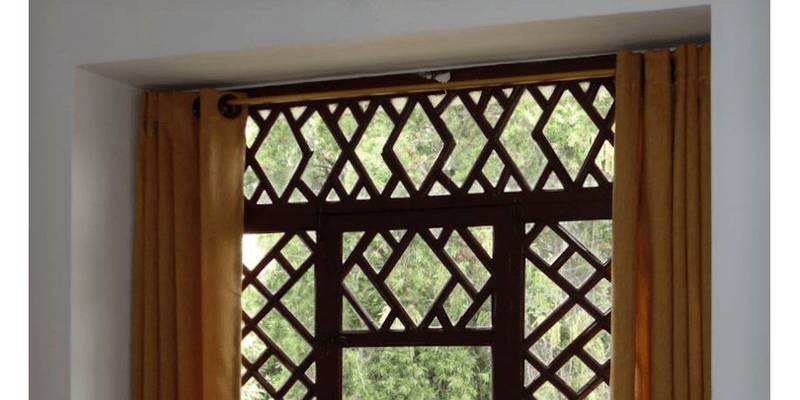
The old window in this photo, apart from changes due to age, fits perfectly, and the bottom part unlatches and unfolds to be completely open. Also, each little segment of glass was cut and fitted individually into these wooden frames. But that was 100 years ago, and they sure don’t make them like they used to! The average windows and doors in more modern construction are generally not very attractive, nor are they very effective in blocking noise.
On the front-entrance door, check to make sure it’s a solid-core door, and not a hollow-core model. designed more for bedrooms and bathrooms. I’ve not seen this frequently, but I have seen it. Once a solid door has all gaps around the frame sealed and has a door-sweep installed, it should do a fairly good job of blocking noise. But a hollow-core door? – no help with the noise, and it’s a grave security issue.
On the other hand, windows are most generally single-paned and do a very poor job of blocking noise. So you could have great doors, nice thick walls, and great noise-separation between floors and ceilings, but the noise from outside the windows will come screaming in through. The easiest way to deal with this is to choose your neighborhood wisely, as was discussed in detail in the previous article on Neighborhood Evaluation.
Newer apartment buildings and some newer homes have much better-quality windows installed, and are very good at blocking noise. As recommended earlier, you should ask everyone to be quiet while you listen to see whatever you can hear when the property is otherwise empty. When you’re inspecting the windows (and do inspect all of them!), be sure to look for any signs of leakage or gaps around the frames where water can come in.
Sliding-Glass Doors
From my personal experience, roughly a quarter of all sliding glass doors in Cuenca are very poorly installed, where the moving parts are not aligned properly, and many of them refuse to close all the way and are unable to be locked. This can be a huge security issue, plus an annoying source of outside noise. Carefully examine all sliding doors to make sure they don’t have these problems.
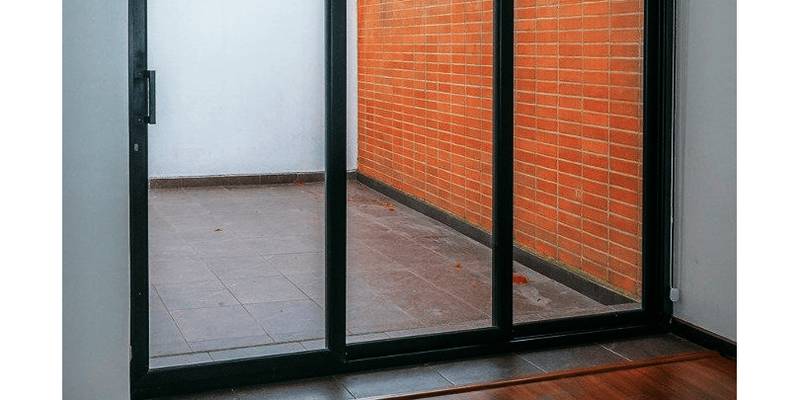
And did you notice the tiled area outside this sliding door? You really need to check that area to make sure a water drain is located in a place that will actually draw the water away from the sliding door, and to make sure that it actually drains properly. If not, you might soon find that water flowing in underneath the door frame during a downpour.
And while you’re at it, look carefully around the door frame and the flooring inside the home for signs of water damage. Sometimes you get water damage because someone left the door open during a downpour, so some damage will not necessarily mean that there’s a construction or installation problem.
In general, they do an awful job of grading and providing adequate drainage for outdoor surfaces here (including rain gutters). This is something you really need to check out, even if it means bringing a bucket or a hose and making sure outside drains function properly and keep the water out of your home. Oh – and for added security – don’t forget to cut a dowel-rod or a broomstick to put in the sliding track(s). It’s cheap, easy, and can significantly improve your overall home security.
Closets
Most closets here are built-in units, and they’re not always in the most convenient location for arranging your bedroom furniture. (This is where your furniture measurements will come in handy.) Also note that many times you’ll find doors or drawers that don’t fit or close well, or that have missing or loose hardware. You should ask to have all of that corrected before you move in.
Floors!
One thing that most prospective renters tend to gloss over is flooring. But the types of flooring in your house are going to make a huge difference in the relative warmth and feel of the house, the amount of sound that’s reflected throughout the house, and the amount of effort each type of flooring is going to require.
Wood
Some slightly older homes still have solid-wood flooring. I personally find this the most comfortable type of flooring to have, in terms of sound and warmth. Depending on how old the floor is, they can sometimes present a challenge for cleaning, but it’s something the average expat should be able to deal with.
Parquet floors
This other type of wooden flooring is the type that I have in my current house, and is shown in this photo. And although I don’t hate it, I don’t necessarily recommend it either. Parquet floors are small pieces of wood, fitted together to form some pattern. In older homes, it’s not unusual for these little tiles to pop up and need to be re-glued. If multiple pieces come up, you’ll need to take some time to make sure you have the pattern correct before you glue them back down again.
Also, cleaning these floors can be a real chore. Because of all the cracks between the tiles, using any significant amount of liquid to clean them will ultimately result in tiles being damaged and coming unglued. The typical way to clean these is to skate around your floor on a couple of big wads of soft steel wool until the dirt is gone, and then apply wax (for wooden floors) and buff them out. You don’t always have to clean them to this degree, but you can plan on doing it at least four to five times per year. When inspecting, look for any loose, missing, or damaged tiles, and then request that repairs be done before you move in.

Piso Flotante (floating floor)
If I can’t have solid wood floors, this is probably my second choice for overall appearance, comfort, and acoustics. It’s a simple vinyl flooring material that “floats” on top of a thin layer of spongy material. It’s easy to clean, it absorbs far more stray noise than ceramic, and it’s generally attractive. On the negative side, piso flotante doesn’t last nearly as long as some other types of flooring. With these types of floors, you’ll want to protect high-traffic areas with area rugs or other floor coverings. When inspecting, look for (and photograph) any areas of noticeable wear or damage.
Tile/Ceramic
It’s nice and shiny, and it’s very easy to clean. But these are my least favorite types of floors because they tend to hold in the cold. Also, acoustically speaking, they absorb nothing! Noise is going to be noisier, and it’s going to bounce off the walls and into the adjacent rooms, up the stairs, etc.
In some of the much older homes, you’ll often find old hand-painted tiles, but this type of tile is generally much warmer and quieter than the modern, shiny ceramic tiles; I do like these floors!
Bathrooms
Almost everything I wrote about kitchens will apply here, too: checking for mold, checking all plumbing fixtures, towel racks, shower heads, etc. Also, flush all toilets to make sure they work, and run the showers to make sure you have reasonable water pressure. Also, make sure the shower drains actually drain.
What’s that smell?
If you smell something akin to raw sewage in a bathroom here, that’s probably exactly what you’re smelling. Vented plumbing doesn’t really happen here, so the result is that awful smell that’s present in some bathrooms here. Usually, the odor will come from a floor drain, or sometimes from the drain in the shower/tub.
“Flushing twice” helped a lot in one of my homes. In yet another, I would pour a little bit of bleach down the drain every week or two. In yet another home I cut some duct tape to size and simply covered the drain. (Fortunately, it didn’t impact the way the plumbing functioned.)
Oh, wow, a Jacuzzi!
Don’t get too excited! I’ve had Jacuzzi tubs in two of my homes, and they took so long to fill that the water was tepid by the time the tub was sufficiently full.
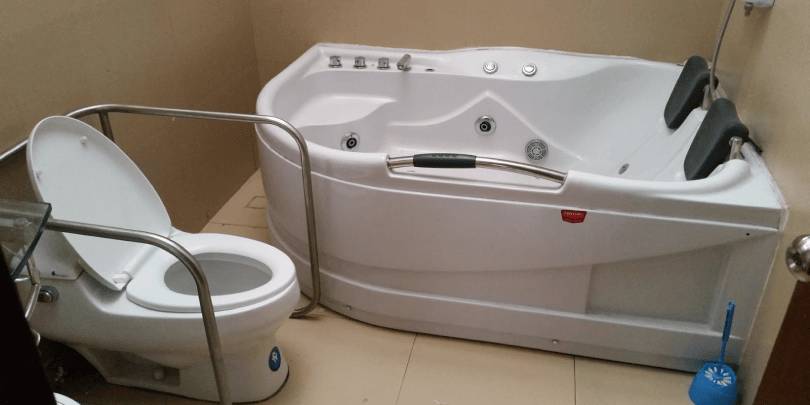
Some of the smaller tubs might be worthwhile, but definitely do not make a rental decision based on whether or not it has a Jacuzzi tub.
Also keep in mind that, generally speaking, there are very few regular bathtubs in Cuenca homes. If you find one of those that’s a good size for one person, that might be worth considering in your decision to rent or not.
Miscellaneous Things to Look for in Rental Properties
The Calefón
This is an on-demand hot-water heater, and most of them run on gas. (Some homes have electric calefóns, but I don’t have a lot of experience with those.)
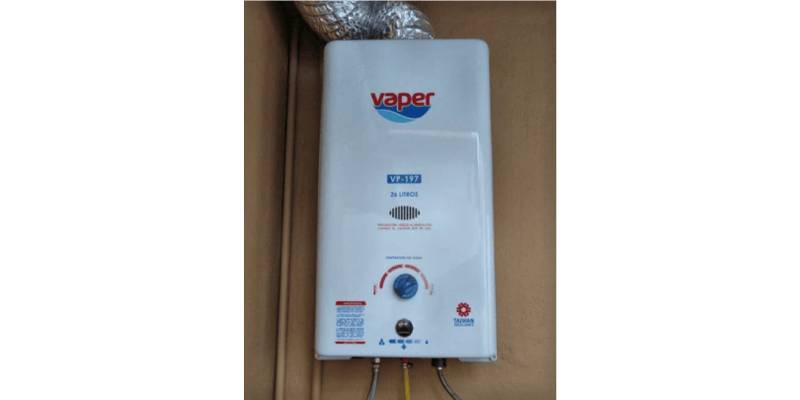
The first thing you’ll want to do is make sure the calefón is being triggered to ignite by turning on a hot-water faucet. If the calefón is functional, you’ll hear the igniter start “clicking” when you turn the hot water on. They don’t have to be connected to gas, because all it needs to try to ignite is a good D-cell battery and sufficient water pressure.
If it doesn’t click when you turn on a hot water faucet, check to make sure the hot-water supply line valve is open. Then, if it still doesn’t click, check the battery to make sure it’s good. Just in case the battery is dead, it’s always a good idea to take a fresh D-cell battery with you when you look at the home. Oh, and don’t forget that the hot-water faucet you turned on may be plumbed backwards, so try both the hot and cold water faucets during this test.
I’d also recommend that you have the owner or agent pop the cover open on the calefón so you can see what it looks like inside. They should be clean and free of big dust balls, or that could affect the operation. If it is dirty inside, request that they clean it out and have it serviced.
Green space considerations
Many people chose apartments because they “don’t want to take care of a lawn.” Well, the good news is that most houses in Cuenca don’t have lawns! Usually, they just tile over everything, so at most you’ll have to sweep and hose down the tile occasionally.
But if you do have a lawn, take a really close look at it to see if you can find a series of 50-cent-sized holes in the ground. If you do, those are most likely tarantula holes, and they’re all interconnected. And tarantulas sometimes like to come inside, so one way you can check for them is to look behind appliances or cabinets to see if there are any dead tarantulas. Keep in mind that the tarantulas here are not aggressive toward humans, and even if you were bitten, their venom is very mild and very rarely lethal.
Request a Deep Cleaning (Limpieza Profunda)
So by now, you’ve walked all through the house. Maybe you’ve done a little “white-gloving” during the inspection, and most likely you found significant dust in the cabinets, closets, etc. What I do is always request a deep cleaning as part of the deal for signing the lease. I’ve never been refused this request.
Taking Photos and Video
As I’ve mentioned all through this article, take plenty of photos and/or videos for the purposes of documenting all damage you find, and also to help yourself further evaluate multiple properties from the comfort of your temporary dwelling. For those photos and videos you take of existing damage or lack of cleanliness, be sure to send a copy to the owner before you sign the lease, and also copy yourself on the same email. Then when you move out in a couple of years, you’ll have evidence to protect yourself against false claims of having done the damage yourself.
Number One Recommendation: Go With Your Gut!
This is a lesson I’ve had to relearn many times – trust your gut! If you’ve done your full inspection of the property and the neighborhood it sits in, you should feel good about any decision to go ahead and rent. But if you have any doubts whatsoever, there’s usually a good reason for it. If you can’t resolve the doubts, then perhaps you should keep looking.
Once again, I couldn’t possibly touch on every possible issue here, but this article should make you sufficiently well-armed to look for and identify any number of problems that could make life in your new home less than pleasant. Watch for the next article on lease issues and negotiation.
Happy hunting!
All photos either by Jeff Schinsky, or contributed by other photographers and used with their permission.
===
Where next?
Check out Jeff's Facebook Group or view YapaTree's Cuenca Rental Listings.